









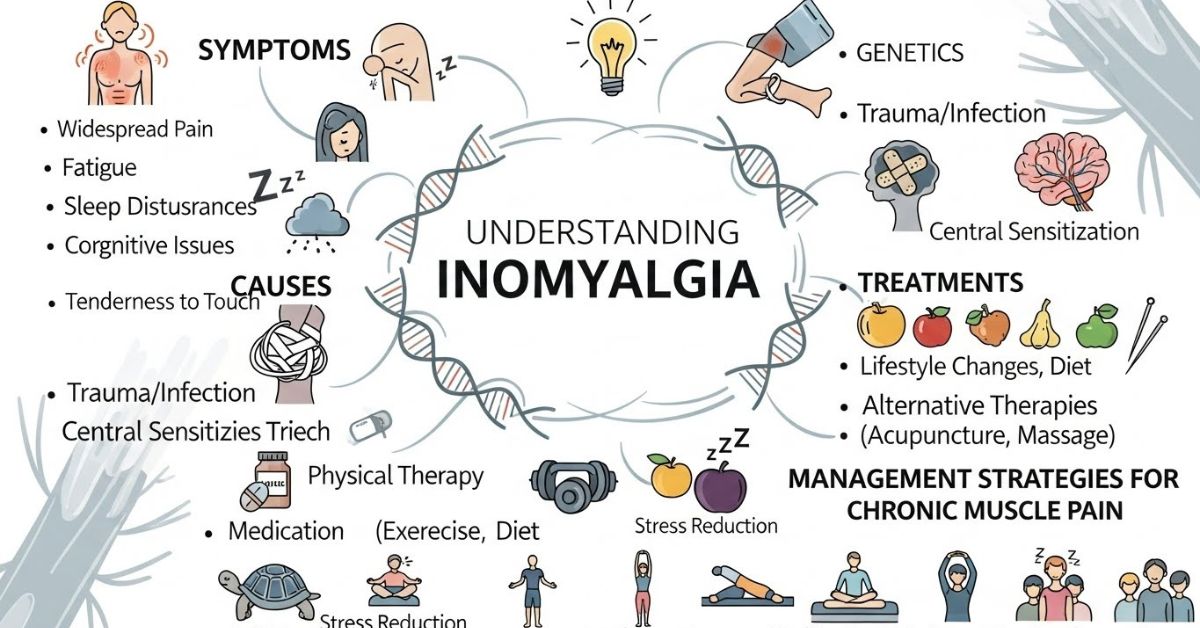
Think about how great it would be if every morning, without leaving your bed, you felt as though you had completed a marathon. This is the reality for a lot of people who deal with inomyalgia, a disorder that causes persistent muscular pain and makes even the simplest of chores seem impossible. Some may be surprised by the sound, yet every day, countless people deal with its consequences. Getting a handle on inomyalgia means taking charge of your health and life again. Let’s investigate this condition further to find out what it is and how to handle it.
What is Inomyalgia?
Persistent muscular pain is a hallmark of immyalgia, a chronic illness. Discomfort that spreads to other areas of the body is common, and it can be miserable and even crippling at times.
Variation from person to person characterises this syndrome, which does not adhere to typical patterns. Pain may be more localised for some people, while for others it may be more diffuse and present throughout their muscles.
Inomyalgia is different from other types of muscular strain or overexertion because it doesn’t always have a specific cause. It develops as a result of intricate interplay between the neurological system and other physiological processes, rather than damage or inflammation.
The complexity of this illness must be recognised in order for it to be understood. Issues affecting a person’s emotional health and ability to go about their everyday lives are common for those living with inomyalgia, in addition to the physical symptoms.
Causes of Inomyalgia
No one knows for sure what causes inomyalgia. Scientists are wondering if it has psychological, environmental, and genetic roots.
Rising stress levels are mentioned by many people as a possible cause. Tension in the muscles, brought on by stress, may make aches and pains worse over time.
The development of this illness may also be influenced by infections or injuries. Unexpected injuries, no matter how small, have the potential to trigger the body’s pain response.
Another area that deserves investigation is hormonal abnormalities. Hormonal swings might affect the way our bodies perceive and respond to pain.
Conditions characterised by persistent muscle pain, such as inomyalgia, frequently come with sleep disruptions. Fatigue and pain can be exacerbated by poor quality sleep.
Immune system dysfunction is being considered by several researchers as a potential reason. For those afflicted with this multi-symptom illness, an exacerbation of muscular irritation and pain may result from an overactive immunological response.
You May Like : Rowdy Oxford Integris — Bold Innovation
Symptoms and Diagnosis
Depending on the individual, those suffering from isomyalgia may have a wide variety of symptoms. Constant muscular pain, like a dull aching or a burning feeling, is the most noticeable symptom. This pain typically radiates to other parts of the body, such as the back, neck, and legs.
Excessive tiredness is another typical sign. A lot of people feel really exhausted, and it doesn’t get better no matter how much they sleep. Patients may also report problems with sleep, such as insomnia or irregular sleep patterns.
Medical practitioners depend on patient histories and physical exams to identify inomyalgia. In order to make sure they’re getting the right diagnosis, they run tests to rule out other possibilities. Early and effective therapy techniques are critical for distinguishing inomyalgia from related conditions such as fibromyalgia or chronic fatigue syndrome, which can be difficult to diagnose without a comprehensive evaluation.
Traditional Treatments for Inomyalgia
A common goal of conventional inomyalgia treatment is alleviation of symptoms. Medicines that reduce inflammation and discomfort, such as paracetamol or NSAIDs, may be prescribed by doctors. These can alleviate pain and swelling.
Physical therapy is yet another typical method. Strength and flexibility training with a personal trainer can help reduce muscle strain. Individuals can acquire safe ways that work for them by working with a therapist.
Anticonvulsants and antidepressants are medications that doctors may prescribe in certain situations. These drugs can alleviate nerve pain and improve the quality of sleep, both of which are critical to the healing process.
Treatment approaches also take lifestyle aspects into account. In addition to more conventional approaches, stress-reduction practices like yoga and meditation can be promoted. This all-encompassing approach seeks to improve overall health by addressing the individual as a whole, not simply their inomyalgia symptoms.
Alternative Therapies for Inomyalgia
For individuals dealing from inomyalgia, alternative therapy may provide some alleviation. Methods that are beneficial to the body and the mind are more popular.
One common choice is acupuncture. This time-honoured method calls for the insertion of tiny needles into strategic anatomical locations. Muscle pain may be alleviated as a result of the attempted balancing of energy flows.
One further way is to practise yoga. A combination of deep breathing exercises and light stretching might help you feel more relaxed and supple. When dealing with persistent pain, many people find it helpful.
There is hope in massage therapy as well. Sore muscles may get relief from techniques like deep tissue massage, which assist alleviate tension.
Omega-3 fatty acids and turmeric are two supplements or dietary adjustments that some people look into because of their anti-inflammatory effects. It is possible that these all-natural cures will have a beneficial effect on health in general.
By improving emotional health and lowering stress levels, mindfulness meditation can be an extra boon for people dealing with chronic pain.
Lifestyle Changes to Manage Inomyalgia
Sometimes, a more comprehensive strategy is needed to manage inomyalgia. Modifying even a few aspects of one’s way of life can have a profound impact.
Begin with a light workout. If you want to be more flexible without putting undue stress on your muscles, try swimming or yoga. Plus, they contribute to the release of endorphins, which have analgesic effects.
Proper nutrition is also important. Inflammation can be better managed with a healthy diet that is well-rounded and includes plenty of fruits, veggies, whole grains, and lean proteins.
To recover, one must get enough sleep. The inomyalgia-related weariness can be alleviated by establishing a regular sleep schedule, which promotes relaxation.
Emotional resilience and stress reduction are two benefits of mindfulness techniques like meditation and deep breathing.
Furthermore, one’s social network is important. When dealing with chronic pain, it helps to spend time with loved ones who understand and can empathise.
To make your life with inomyalgia more bearable, you may want to think about adding these tactics into your routine.
Coping with Chronic Muscle Pain: Tips and Strategies
Although dealing with persistent muscle discomfort can be a major challenge, there are practical ways to alleviate some of the symptoms. Start by making time each day for light stretching and low-impact workouts. Stiffness is often eased by movement.
Keep a pain journal as a second step. Keep track of your symptoms; they may have a pattern associated with specific foods or activities. Gaining this understanding can enable you to make well-informed decisions.
Meditating or practicing deep breathing exercises are examples of mindfulness activities that can greatly alleviate stress. It is crucial to make time for relaxation because stress can worsen physical pain.
Taking part in group pursuits is also crucial. Put yourself in the company of encouraging people who get what you’re going through. Lessening the emotional burden is facilitated by sharing experiences.
Talk to a therapist or counsellor who focusses on helping people with chronic pain; you won’t regret it. Customised plans are available to meet your specific lifestyle and financial requirements.
Conclusion
A multipronged strategy is necessary for the management of inomyalgia. The first step in getting better is knowing you have this ailment. Finding the right diagnosis and therapy is possible when people are aware of the signs and symptoms.
While conventional medical treatments might alleviate symptoms to a certain extent, studying complementary and alternative medicine options may also yield promising results. You may even improve your quality of life by making certain adjustments to your lifestyle, including exercising regularly, learning to manage your stress, and eating a balanced diet.
Always keep in mind that managing persistent muscular discomfort is a continuous process. Individuals afflicted by inomyalgia can reclaim agency over their lives by making use of a variety of tactics and suggestions. Many people dealing with inomyalgia can live successfully with the correct assistance and resources.
Read More : scoopupdates .com — Your Smart Source for News & Trends